



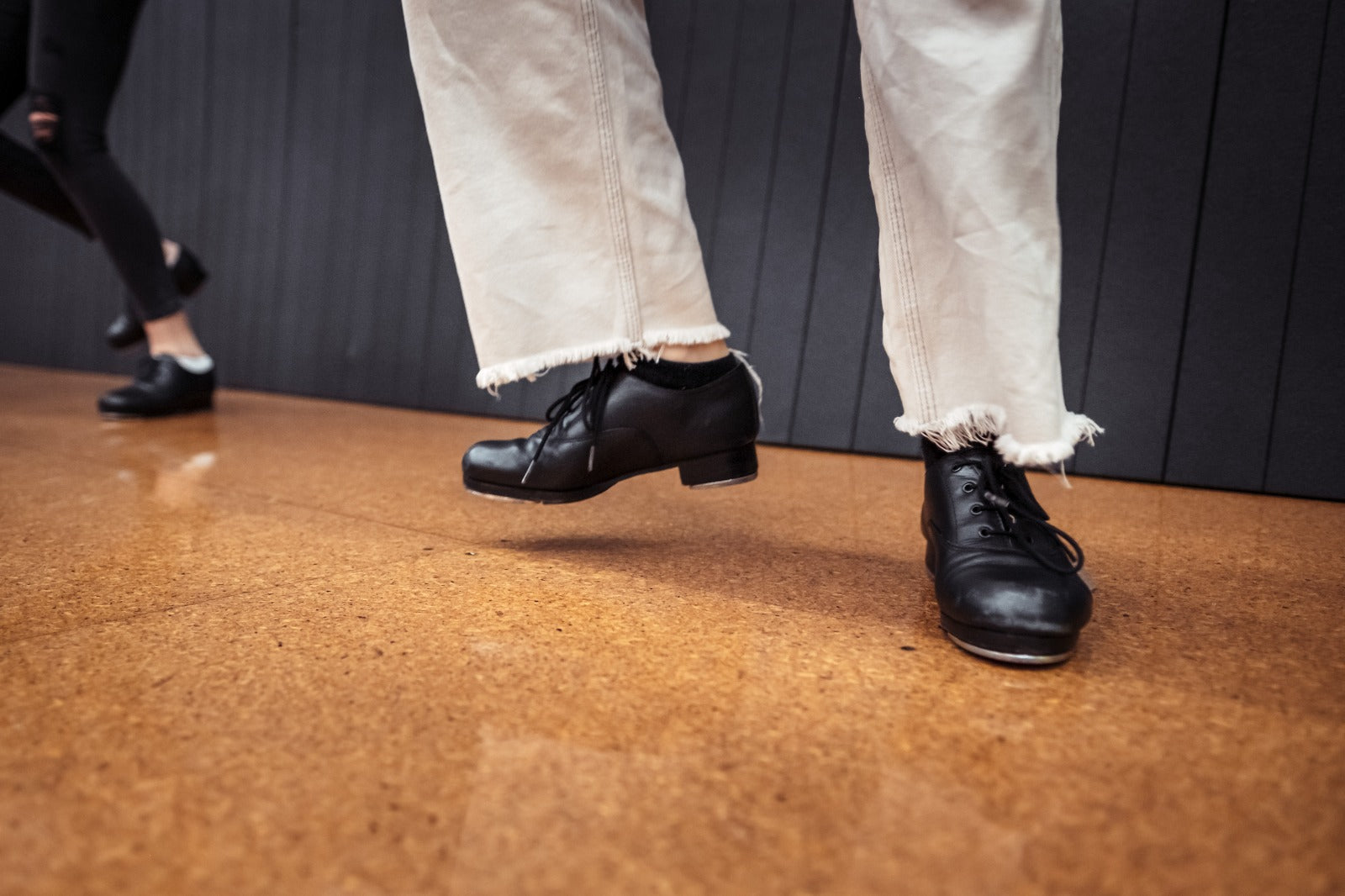
Tap is the only dance discipline where the shoe is part of the music.
Every step produces sound. Every adjustment in pressure, timing, or angle changes the result. This means the construction of the shoe directly influences how a dancer learns, trains, and performs.
For both dancers and parents, understanding what sits behind that sound leads to better decisions.
A tap shoe is an instrument
Tap shoes are designed to create sound through impact.
Metal plates attached to the toe and heel strike the floor, producing vibration and rhythm with each movement.
The quality of that sound depends on how the shoe is built. Materials, construction, and how components are assembled all play a role in clarity, volume, and tone.
For dancers, this affects control. For parents, it affects how quickly a student progresses.
What actually affects sound
Several elements influence how a tap shoe performs:
- Tap plates: the material and fit determine how clear or dull the sound is
- Sole construction: a firm, well built sole amplifies sound and supports precision
- Attachment method: secure plate fixing maintains consistency over time
- Overall structure: quality construction allows sound to project rather than be absorbed
When these elements work together, the result is clear, consistent sound. When they do not, the dancer has to compensate.
Why sound quality matters for training
Tap is built on rhythm and timing.
Shoes that produce consistent, defined sound allow dancers to hear mistakes and correct them immediately. This supports faster development of coordination, musicality, and control.
In practical terms, better sound leads to better feedback. Better feedback leads to better training.
Control starts with the shoe
Beyond sound, construction also affects how the shoe behaves under movement.
A secure fit improves balance and precision. Poor fit or unstable construction reduces control and limits how clearly a dancer can execute movement.
For younger dancers, this often shows up as inconsistency. For more advanced dancers, it limits speed and clarity.
In both cases, the shoe influences the outcome.
What parents should look for
For parents, tap shoes can appear similar at first. The differences become clear with use.
Higher quality shoes tend to:
- Produce clearer, more consistent sound
- Hold their structure across extended training periods
- Provide better stability and support
- Maintain performance rather than degrading quickly
Lower quality shoes may work initially but often lose clarity and structure over time, leading to earlier replacement and slower progress.
Why many studios standardise tap footwear
Tap is often taught in groups, where consistency matters.
If dancers wear footwear that produces different sounds or responds differently, it becomes harder for teachers to maintain timing and clarity across the class.
This is why many Australian studios recommend a consistent footwear approach. It reduces variability and allows dancers to train under the same conditions.
Slick supports this through structured partnership models, including Studio Alliance, without requiring studios to manage stock.
The link between consistency and performance
In tap, small differences compound.
A shoe that produces inconsistent sound or response forces the dancer to adapt.
Over time, this introduces variation into technique.
A consistent shoe allows the dancer to focus on rhythm, timing, and control without adjusting to the footwear.
For both dancers and parents, the outcome is the same:
- Clearer sound
- More efficient training
- More confident performance


