



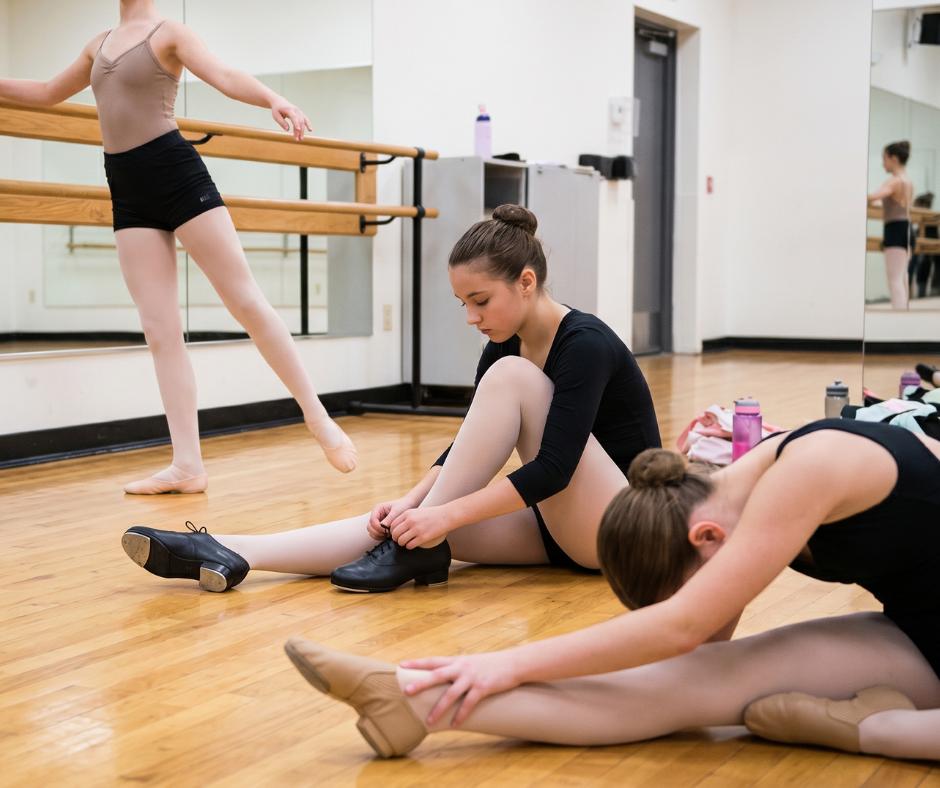
Why performance footwear matters more than ever in dance training
Dancers spend far more time in training than on stage. Hours are built in studios repeating combinations, refining technique, and developing control. Over time, small inconsistencies become habits, and footwear directly shapes how movement is learned and repeated.
At Slick Dancewear, we design around that reality.
Most dance footwear is developed to meet visual expectations first—it needs to look right and suit a broad market. What often comes second is how the shoe behaves over repeated use, how it responds to pressure, and how it holds structure across long training cycles. This gap shows itself in the studio.
Footwear is part of the training process
When footwear lacks consistency, dancers compensate. They adjust weight placement, change how they strike the floor, or modify movement to suit the shoe. Reliable footwear removes that variable. It allows dancers to repeat movement with greater control, hear the result clearly, and build muscle memory that carries through to performance.
This is especially critical in disciplines where sound, articulation, and timing are central. This thinking sits behind how we approach every product.
Designing from the floor up
Every Slick shoe begins with how a dancer contacts the floor. We consider:
- Weight transfer: how the foot meets and moves through the floor.
- Sound production: the clarity and response of each strike.
- Continuity: how movement flows from one step to the next.
From there, the design is shaped with restraint. We focus on fewer products and refine them deeply, rather than expanding across large ranges. Each category is built for its own movement language. Ballet, jazz, and tap are not variations of the same design; they place different demands on the foot and require different responses from the shoe.
The role of sound in tap
Tap footwear makes this approach visible. A tap shoe is not just footwear; it is an instrument. Inconsistent plate attachment or restrictive construction reduces clarity and limits control. This impacts both training and performance.
Our Oxford and PRO tap shoes are built with loose-fitting plates and ACOUSTEC™ technology to maximise resonance and tonal depth. This allows dancers to hear and feel each strike clearly, ensuring consistent response and control.
Consistency for studios
For studios, footwear is not an individual decision—it affects entire classes. When students wear inconsistent footwear, movement quality becomes harder to standardise, sound varies across the group, and examinations lose uniformity.
This is why many Australian studios move towards recommending a single, reliable footwear system. Slick supports this through both Wholesale Partnerships and the Studio Alliance program, allowing studios to maintain consistency without taking on inventory or operational complexity.
Fewer distractions, better performance
The role of footwear is not to draw attention—it is to remove friction. When shoes behave predictably, dancers stop thinking about them. Training becomes more efficient, and focus stays where it belongs: on the work itself.


